
 KevinTest
 Leadership is involving is the third in this short series. In case you have missed the first two, here are links to those articles. The first one was Leadership is . . . Modeling. And the second one was Leadership is . . . Teaching. But today I want to focus on involving others through our leadership.
After we have modeled our convictions, purpose and plan and then shared with others where we are headed and how they can be a vital part of that process, then we must begin involving people.
It is not enough to plan and structure things. It is not enough to have goals and action steps, we must involve and engage people in the actual implementation. Involving begins during the previous stage of teaching/learning because it simply won’t work to tell others what the vision and plan is and how they fit in it without giving them opportunity to contribute to the formation of the vision and plan.
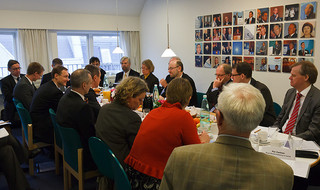 Even if you have the leverage of certain extrinsic motivators, you and your organization will simply not achieve great results if you merely give people a list of expectations. As leaders we need to involve people in every part of the process from the brainstorming session to the recruitment of the team to the development of the process and to the analysis of the “success” of the plan. We must involve people not only by letting them have a seat at the table but seeking and welcoming their ideas and insights all along the way. Involvement should create ownership and produce far greater results than any one person can achieve alone.
Photo credit: B Tal / Foter / CC BY-NC
Photo credit: Baltic Development Forum / Foter / CC BY
Photo credit: EU Social / Foter / CC BY-NC-SA




Leadership is… Involving:
Leadership is involving is the third in this short series. In case you have… http://t.co/O10UZwhQH1
I think that involving others is easier at some points in the process than others. For instance, it is sometimes easy to have a big group brainstorming ideas. But, it is often hard to get that same big group to come to consensus.
I have also had difficulty getting people to want to be involved; even with the ideas they generate, and have training and “know-how” about. Getting them trained, modeling for them, and then trying to involve them only works if they want to put for the time and energy. In the work-place, you will always have those who simply come in, do their assigned job, and leave. They do what they do well, but they don’t want to get involved with the big picture or do anything more than is required. In the non-profit and ministry arenas, you would think it would be different; you would think they were there because they already had a desire to be involved in the big picture. I’ve not found that to be true. I think that in our training and modeling and seeking to involve people, we must also be discerning, noting who is really interested, where their passions lay, what their energy level is. I think I think, that as leaders, we need to be okay with some people only doing what they are asked to do, and doing that one thing well. As we see those who desire to become more connected and add more to the whole team, we can direct, guide, and empower them with more things and see how they do. In that process I think we will find people more engaged in what they are doing, because it is something they wanted to do, had insights into, and had support in. But I have come to believe that if we expect all people to rise to the same level of involvement, we are setting ourselves up for serious disappointment. Thoughts?
Janet Johnson liked this on Facebook.